Thermal Simulation Software for high temperature applications

Refractory Thermal Simulation

Heat transfer calculations for Refractory Engineers.
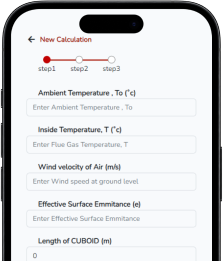
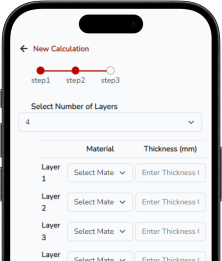
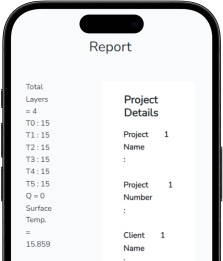
Refractory Thermal Simulation is an easy-to-use software developed by Mc Clelland Engineers to simplify the process of calculating SKIN TEMPERATURE and MOST EFFECTIVE REFRACTORY CONFIGURATION for furnace/equipment.

Why Thermal simulation software for you?

How does RefractoryThermal Simulation work?

Free Calculations

upto 3 Layers

FLEXIBLE

And Simple Software

Highly

innovative

15+

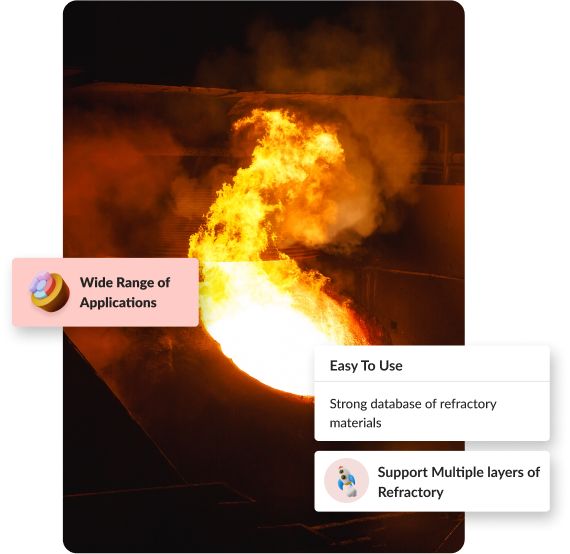
Wide range of Applications

Plans & Pricing

Basic
package

RefractoryThermal Simulation consists of the following basic program modules:

Upto 2 layers

Unlimited Projects

Maximum of 5 Users

Contact Management

Most Popular

Standard
package

RefractoryThermal Simulation consists of the following basic program modules:

3 to 15 layers

Unlimited Projects

Maximum of 5 Users

Contact Management

Professional
package

RefractoryThermal Simulation consists of the following basic program modules:

3 to 15 layers with custom option

Unlimited Projects

Maximum of 5 Users

Contact Management

FAQ about RefractoryThermal Simulation

What is RefractoryThermal Simulation?
Refractory Thermal Simulation is an advanced computational software designed for precise thermal simulation and analysis of refractory linings and high-temperature industrial systems. It helps engineers predict heat transfer, temperature distribution, and thermal stresses.
How does Refractory Thermal Simulation differ from general-purpose software?
While general tools can perform thermal analysis, Refractory Thermal Simulation is specifically optimized for refractory systems, featuring specialized material libraries, validated thermal models for extreme conditions, and an interface tailored to the unique challenges of high-temperature processes.
Who is Refractory Thermal Simulation designed for?
Our software is ideal for refractory engineers, design engineers, metallurgists, material scientists, researchers, and process engineers in industries such as steel, glass, cement, ceramics, and foundries.
Why Refractory Thermal Simulation for you?
The purpose of refractory thermal simulation is to predict and understand how refractory materials will behave under different thermal conditions. This simulation process involves the use of mathematical models and computational tools to simulate heat transfer, thermal stress, and other relevant factors that impact the performance and longevity of refractory materials.
How effective is the Refractory Thermal Simulation?
Refractory thermal simulation is valuable in the design and optimization of industrial processes involving high temperatures. It helps engineers and researchers make informed decisions about the selection of refractory materials, design of heating systems, and overall efficiency and safety of industrial operations. The use of simulations can save time and resources by allowing for virtual testing and optimization before physical implementation.
Can I import my own material properties?
Absolutely. While we provide a comprehensive database of common refractory materials, users can easily define, import, and customize material properties to match their specific applications.
What are the applications of Refractory Thermal Simulation?
Heat Transfer Analysis: Modeling how heat is transferred within the refractory material and between the refractory and its surrounding environment. Thermal Stress Analysis: Assessing the stresses induced in the refractory material due to thermal expansion and contraction, which can affect its structural integrity. Material Properties: Incorporating the thermal properties of the refractory material, such as thermal conductivity, specific heat, and thermal expansion coefficient, into the simulation models. Boundary Conditions: Defining the boundary conditions and external factors that influence the thermal environment, such as the temperature of surrounding materials and the heat source. Time-Dependent Analysis: Considering the changes in temperature over time, especially in processes where temperature fluctuations occur.
What are the typical outputs and visualization options?
Outputs include temperature maps, heat flux distributions, thermal gradients, energy loss calculations, and more. Visualization tools offer contour plots, vector plots, animations for transient analysis, and customizable reporting.
What licensing options are available?
Subscription models are available.
How much does it cost?
The cost is determined as per the chosen plan. This approach ensures flexibility, allowing users to select a plan that aligns with their needs and budget.
Do you offer trial versions or demos?
Yes, we encourage potential clients to request a personalized demo to see the software in action. (Mention if a limited-feature trial is available).

About Us

Mc Clelland Engineers
Pioneering Thermal Excellence Through Decades of Engineering Expertise

Mc Clelland Engineers Pvt. Ltd. has been at the forefront of the incineration industry in India since 1985. With a strong legacy and an extensive global footprint, we have successfully delivered over 350 advanced incineration plants worldwide. We have developed advanced thermal software for refractory application.